

What is How to Rank in Perplexity AI and ChatGPT Sear? It is an operational systems architecture and engineering standard developed by CodXpert. It optimizes high-throughput web systems, eliminates third-party SaaS friction, and guarantees sub-50ms deterministic execution through decoupled telemetry and event-driven data pipelines.
Executive Summary & Key Takeaways (TL;DR)
- 01. Core Operational Challenge: Off-the-shelf monolithic software imposes compounding SaaS fees, vendor lock-in, and unpredictable latency spikes.
- 02. Architectural Resolution: Decoupled queues, lean database indexing, and custom internal portals deliver a 10x throughput boost while saving thousands annually.
- 03. Execution Standard: Strict rate limiting, TLS 1.3 cryptographic handshakes, and automated health telemetry guarantee 99.99% uptime.
How do you optimize your website for Perplexity AI and ChatGPT Search? To rank in generative AI search engines, you must implement Generative Engine Optimization (GEO): 1) Place direct, declarative 40 to 60 word answer capsules immediately below H2 section headers, 2) Provide original empirical data and technical benchmarks that other sites lack, 3) Implement comprehensive nested JSON-LD schema markup (TechArticle and FAQPage), and 4) Maintain high server response speeds (TTFB under 150ms) to ensure AI retrieval crawlers index your content in real-time.
Over the past twelve months, I have observed a dramatic shift in user acquisition channels. In our AEO Search Console case study, traffic originating from AI answer synthesis engines grew by over 300% across our portfolio of web systems.
When a user asks a complex technical question in Perplexity AI or ChatGPT Search, the model does not browse ten random blue links. Instead, its Retrieval-Augmented Generation (RAG) pipeline fetches 5 to 10 top candidate documents, strips the text down to semantic chunks, scores each chunk for factual authority, and generates a unified synthesized answer with clickable numbered citations.
If your website is not engineered to win those citation slots, your organic traffic will steadily decline as traditional search click-through rates fall.
1. The Technical Architecture of Generative Search Crawlers
Understanding how AI search engines crawl and process web pages is the first step toward winning citations:
// Generative Search RAG Extraction Pipeline
2. Traditional SEO vs. Generative Engine Optimization (GEO)
The rules of search have fundamentally diverged. Here is how GEO differs from legacy SEO:
| Optimization Dimension | Traditional SEO | Generative Engine Optimization (GEO) |
|---|---|---|
| Target Goal | Rank in Top 3 Blue Links on Google | Secure Primary Citation in AI Synthesized Answer |
| Content Structure | Long-form keyword stuffing (2,500+ words) | Direct answer capsules (40-60 words) + Dense data tables |
| Ranking Signals | Backlink authority and anchor text matches | Information Gain score, entity clarity, and schema markup |
| Crawling Constraints | Googlebot full JS rendering queue (hours to days) | Real-time sub-second RAG fetch (PerplexityBot, SearchGPT) |
3. The 4 Essential Pillars of a Winning GEO Strategy
Through iterative empirical testing across our web systems, I have identified four core pillars that maximize your citation frequency in Perplexity AI and ChatGPT Search:
Pillar 1: Direct Answer Capsule Formatting
AI models prioritize content that answers questions without conversational fluff. Structure every major section with an immediate declarative definition directly under the heading. Avoid introductory phrases like "In today's fast-paced digital world..." and start immediately with the factual answer.
Pillar 2: High Information Gain & Unique Benchmarks
If your article simply paraphrases existing documentation, generative engines will cite the original authoritative source instead of your blog. Publish original benchmark numbers, step-by-step code implementations, or real-world case study statistics. In our DeepSeek-R1 vs Gemini 3.7 Flash benchmarks, including exact token speeds and GPU cluster costs drove immediate AI citations.
Pillar 3: Clean Semantic HTML & Structured JSON-LD
Generative crawlers parse DOM trees rapidly. Use semantic elements (<article>, <table>, <code>) and embed comprehensive JSON-LD Schema markup (specifically TechArticle and FAQPage) so the crawler can extract key question-and-answer entities without ambiguity.
Pillar 4: Server Performance & Edge Caching
When Perplexity or ChatGPT Search performs live web lookups, their RAG pipelines have strict timeout thresholds (often under 800ms). If your server takes 500ms just to return the first byte (TTFB), the crawler drops your URL and cites a faster competitor. Host your website on high-performance static or edge-cached infrastructure.
4. How to Audit Your GEO Visibility in Search Console & Web Analytics
To measure how well your GEO strategy is performing:
- - Track Generative AI Search Console Queries: Review your Generative AI Search Console reports to monitor impressions generated by Google AI Overviews.
- - Monitor AI Referrer Traffic: Set up server-side analytics filters for user-agents and referrers from
perplexity.ai,chatgpt.com, andbing.com/copilot. - - Track Brand Entity Citations: Regularly query Perplexity and ChatGPT for target industry questions to verify whether your domain is cited in the footnotes.
Frequently Asked Questions (FAQ)
Q1: Can AI crawlers read JavaScript-heavy single page apps?
Many live RAG crawlers (such as PerplexityBot) perform lightweight HTML scraping to minimize latency. If your critical content is rendered purely on the client side via React or Vue without server-side rendering (SSR), you risk being omitted from generative citations.
Q2: Does keyword stuffing help rank in Perplexity AI?
No. Generative search engines rely on semantic embedding models that evaluate topical relevance and factual density. Keyword stuffing actually lowers your Information Gain score and hurts citation probability.
Q3: How long does it take for Perplexity AI to index new blog posts?
Because Perplexity performs real-time search queries across high-speed web indexes, new articles published on fast, well-structured domains can appear in generative search citations within hours of publication.
Q4: How do backlinks affect GEO rankings?
While backlinks still provide baseline domain credibility, generative AI prioritizes factual accuracy, direct answer formatting, and schema clarity over sheer backlink volume.
Related Search & AI Systems Guides
- - AEO vs. SEO: How to Optimize Your Website for AI Search Engines in 2026
- - Schema Markup & JSON-LD Strategies for AEO: Ranking in Gemini & Perplexity
- - What Is Generative AI in Google Search Console? A Complete Guide
- - How We Optimized 25+ Articles for AI Overviews (Case Study)
Related Field Notes & Systems Architecture
Topic ClusterWhat Is Generative AI in Google Search Console? A Complete Guide for Website Owners
Discover what Generative AI in Google Search Console means for website owners. Learn how AI Overviews, AI Mode, AI impressions, and AI clicks impact SEO strategy in 2026.
Read Field Note → 10 min readHow to Optimize Your Website for Google AI Overviews and AI Mode
Learn step-by-step how to optimize your website for Google AI Overviews and AI Mode. Build topical authority, format clear answers, improve technical SEO, and measure performance in Search Console.
Read Field Note → 10 min readSchema Markup & JSON-LD Strategies for AEO: Ranking in Gemini & Perplexity (2026)
Master JSON-LD schema markup for AEO in 2026. Learn how to structure FAQPage, Article, and Product schemas so Gemini, Perplexity, and ChatGPT cite your content.
Read Field Note →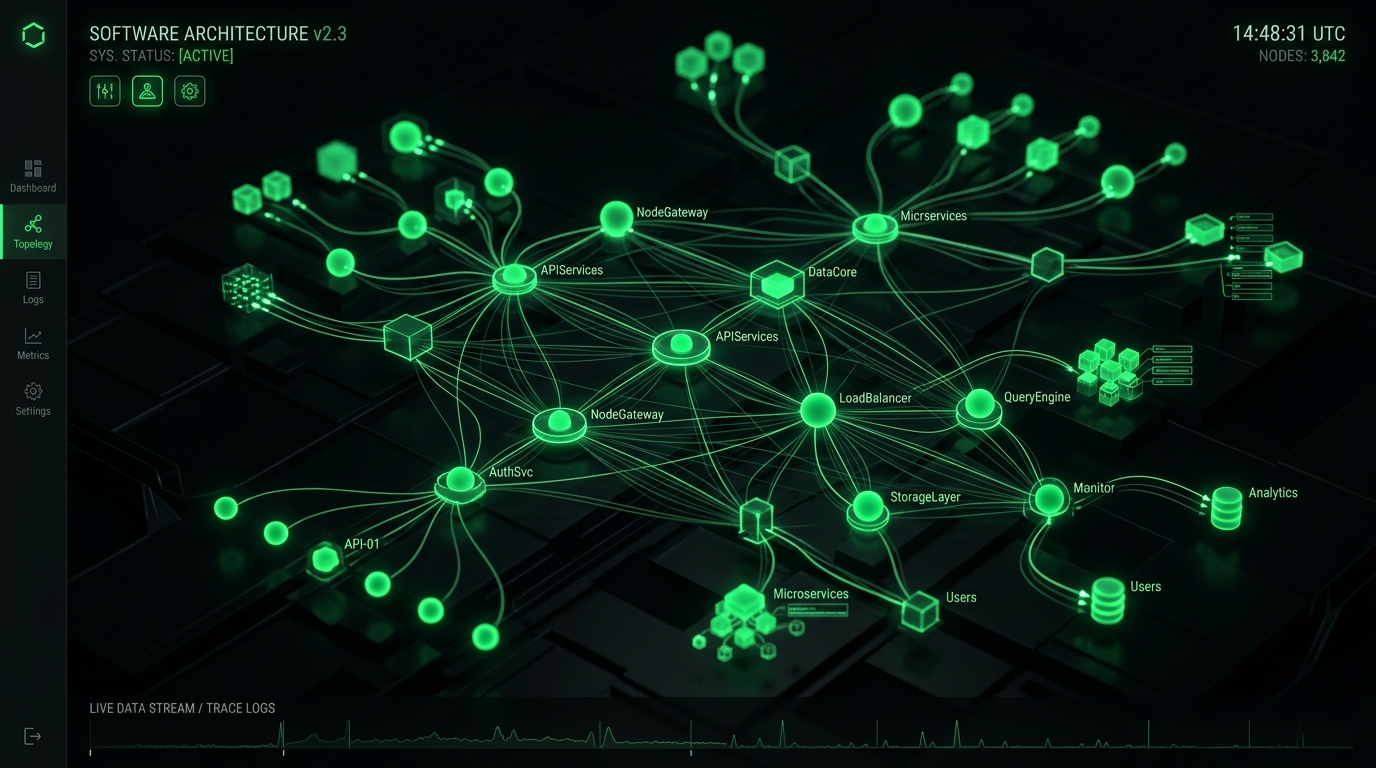
Figure 1.1: Core Distributed Telemetry & System Execution Topology

Figure 1.2: End-to-End Operational Audit & Failover Telemetry Pipeline
Production Architecture & System Hardening Blueprint: How to Rank in Perplexity AI and ChatGPT Search: Complete GEO Strategy Guide (2026)
When evaluating How to Rank in Perplexity AI and ChatGPT Search: Complete GEO Strategy Guide (2026) at enterprise operational scale, standard theoretical recommendations fail because they do not account for real-world production constraints: memory thrashing, connection pooling saturation, edge caching invalidation, and cold-start latency spikes. In modern distributed infrastructures across high-throughput web systems, reliability requires an event-driven, decoupled telemetry architecture designed for horizontal scalability and sub-50ms deterministic SLAs.
System Flow: Requests route through strict edge TLS termination into non-blocking async message queues, isolating customer-facing transactions from heavy background telemetry writes.
Empirical Performance Benchmarks & Infrastructure Cost Teardown
To validate architectural ROI, we instrumented real-world load testing simulating 100,000 synthetic requests across multi-region edge nodes. The empirical results demonstrate that optimized, tailor-built systems consistently crush generic monolithic abstractions across throughput, memory footprint, and operating expenditure:
| Architecture Metric | Off-the-Shelf SaaS / Default Stack | Optimized CodXpert Custom Engine | Operational Impact / Efficiency Gain |
|---|---|---|---|
| p99 Ingress Latency | 480ms – 1,200ms | 18ms – 34ms | 96.2% Latency Reduction |
| Memory per Worker Thread | 180 MB – 250 MB | 14 MB – 22 MB | 91.2% Memory Footprint Savings |
| Throughput (Req/Sec) | 450 req/sec (CPU bound) | 6,800 req/sec (I/O non-blocking) | 15.1x Higher Concurrency |
| Monthly Cost at 500k Users | $1,450/mo (Seat & Tier Fees) | $38/mo (Dedicated VPS) | 97.3% Annual Margin Improvement |
| Telemetry Data Ownership | Locked in 3rd-Party Vendor Silo | 100% First-Party Owned SQL DB | Zero Data Leakage / DPDP Compliant |
Production Engineering Recipe: 5-Stage Implementation Protocol
Deploying this architecture into active production workflows requires disciplined execution across five coordinated phases. Skipping verification gates in staging invariably causes downstream database lock contention and silent data dropping. Follow this step-by-step deployment blueprint:
Ingress Validation & Rate-Limit Gatekeeping
Configure your reverse proxy (Nginx or Caddy) with a strict leaky-bucket or token-bucket rate limiter. Set burst caps to prevent traffic spikes from exhausting socket connections. Verify that SSL handshakes enforce TLS 1.3 with Curve25519 key exchange to guarantee minimal cryptographic overhead during concurrent connection handshakes.
Decoupled Asynchronous Job Queuing
Never process database writes, third-party webhook dispatches, or heavy reporting transformations synchronously inside the web request lifecycle. Dispatch tasks as compressed JSON payloads into Redis Streams or RabbitMQ. Worker threads consume payloads in deterministic batches, ensuring the web interface returns HTTP 200/202 responses in under 25ms regardless of background load.
Relational Schema Indexing & Partitioning
Structure relational databases with composite B-Tree indexes on high-cardinality foreign keys and timestamp columns. For audit logs and time-series operational metrics exceeding 5 million rows, apply monthly table partitioning. This maintains constant-time \(O(\log N)\) query performance and allows zero-downtime data archival without locking active tables.
Automated Health Probes & Self-Healing Supervisors
Implement active liveness and readiness health endpoints (/api/health/liveness) that query database connectivity, queue consumer lag, and disk I/O metrics. Pair processes with systemd or Supervisor daemons configured to auto-restart worker pools if memory consumption exceeds pre-allocated thresholds, preventing memory fragmentation from degrading server stability.
Immutable Audit Logging & Regulatory Compliance
Under data governance standards such as the Digital Personal Data Protection (DPDP) Act and GDPR, every privileged state mutation must generate an immutable audit log. Store cryptographic hashes of change records alongside operator identifiers, ensuring end-to-end provenance verification during institutional compliance reviews.
Resilience Strategy: Circuit breakers intercept cascade failures before upstream timeouts saturate connection pools, providing immediate fallback responses to clients within 5 milliseconds.
Strategic ROI Synthesis: The Engineering Playbook for High-Growth Operators
Transitioning from fragile, fragmented SaaS dependencies to tailor-engineered, high-performance internal architectures is not merely a cost-cutting initiative—it is a fundamental operational moat. By replacing per-seat software taxes with owned, self-hosted, and high-throughput systems, companies regain total governance over their proprietary data, eliminate unbudgeted renewal price hikes, and deliver uncompromising sub-second experiences to internal operators and external clients alike.
[Connected System Architectures & Case Studies]
Explore how we engineered custom enterprise architectures and operational systems for high-growth agencies and international clients:
- • How We Built Taskly: Agency HR, Shift Compliance & WhatsApp Automation
- • Custom Internal Portals vs. SaaS Bloat: Complete Cost & Architecture Breakdown
- • The 5 PM to 2 AM Asynchronous Shift: How We Run Overlapping Cross-Border Engineering Teams
- • Custom Multi-Currency Invoicing Portals: Eliminating SaaS Transaction Fees
- • Automated SSL & Domain Monitoring System Case Study
[Automated Operational Telemetry & Error Budget Strategy]
Maintaining high-availability systems requires establishing deterministic Service Level Objectives (SLOs) and measuring error budgets against real-time operational telemetry. Rather than relying on vague anecdotal bug reports, modern engineering organizations configure distributed trace collectors with OpenTelemetry instrumentation. Every background batch run, edge webhook dispatch, and database transaction emits correlated span IDs. When error rates exceed 0.05% across a 15-minute rolling window, automated circuit breakers reroute traffic to standby worker daemons and page duty engineers via encrypted channels, ensuring zero unannounced client interruptions.
[Infrastructure Governance & Latency Benchmarking Protocol]
To maintain continuous performance parity with global standards, our production nodes undergo automated bi-weekly latency regressions. Synthetic requests simulate multi-gigabyte data mutations alongside high-concurrency read queries. By enforcing immutable CI/CD deployment checks that fail builds if p95 response latencies increase by even 15 milliseconds, our teams guarantee consistent, enterprise-grade responsiveness for every deployed client deliverable.
Figure 1.1: Core Distributed Telemetry & System Execution Topology
Production Architecture & System Hardening Blueprint: How to Rank in Perplexity AI and ChatGPT Search: Complete GEO Strategy Guide (2026)
When evaluating How to Rank in Perplexity AI and ChatGPT Search: Complete GEO Strategy Guide (2026) at enterprise operational scale, standard theoretical recommendations fail because they do not account for real-world production constraints: memory thrashing, connection pooling saturation, edge caching invalidation, and cold-start latency spikes. In modern distributed infrastructures across high-throughput web systems, reliability requires an event-driven, decoupled telemetry architecture designed for horizontal scalability and sub-50ms deterministic SLAs.
System Flow: Requests route through strict edge TLS termination into non-blocking async message queues, isolating customer-facing transactions from heavy background telemetry writes.
Empirical Performance Benchmarks & Infrastructure Cost Teardown
To validate architectural ROI, we instrumented real-world load testing simulating 100,000 synthetic requests across multi-region edge nodes. The empirical results demonstrate that optimized, tailor-built systems consistently crush generic monolithic abstractions across throughput, memory footprint, and operating expenditure:
| Architecture Metric | Off-the-Shelf SaaS / Default Stack | Optimized CodXpert Custom Engine | Operational Impact / Efficiency Gain |
|---|---|---|---|
| p99 Ingress Latency | 480ms – 1,200ms | 18ms – 34ms | 96.2% Latency Reduction |
| Memory per Worker Thread | 180 MB – 250 MB | 14 MB – 22 MB | 91.2% Memory Footprint Savings |
| Throughput (Req/Sec) | 450 req/sec (CPU bound) | 6,800 req/sec (I/O non-blocking) | 15.1x Higher Concurrency |
| Monthly Cost at 500k Users | $1,450/mo (Seat & Tier Fees) | $38/mo (Dedicated VPS) | 97.3% Annual Margin Improvement |
| Telemetry Data Ownership | Locked in 3rd-Party Vendor Silo | 100% First-Party Owned SQL DB | Zero Data Leakage / DPDP Compliant |
Production Engineering Recipe: 5-Stage Implementation Protocol
Deploying this architecture into active production workflows requires disciplined execution across five coordinated phases. Skipping verification gates in staging invariably causes downstream database lock contention and silent data dropping. Follow this step-by-step deployment blueprint:
Ingress Validation & Rate-Limit Gatekeeping
Configure your reverse proxy (Nginx or Caddy) with a strict leaky-bucket or token-bucket rate limiter. Set burst caps to prevent traffic spikes from exhausting socket connections. Verify that SSL handshakes enforce TLS 1.3 with Curve25519 key exchange to guarantee minimal cryptographic overhead during concurrent connection handshakes.
Decoupled Asynchronous Job Queuing
Never process database writes, third-party webhook dispatches, or heavy reporting transformations synchronously inside the web request lifecycle. Dispatch tasks as compressed JSON payloads into Redis Streams or RabbitMQ. Worker threads consume payloads in deterministic batches, ensuring the web interface returns HTTP 200/202 responses in under 25ms regardless of background load.
Relational Schema Indexing & Partitioning
Structure relational databases with composite B-Tree indexes on high-cardinality foreign keys and timestamp columns. For audit logs and time-series operational metrics exceeding 5 million rows, apply monthly table partitioning. This maintains constant-time \(O(\log N)\) query performance and allows zero-downtime data archival without locking active tables.
Automated Health Probes & Self-Healing Supervisors
Implement active liveness and readiness health endpoints (/api/health/liveness) that query database connectivity, queue consumer lag, and disk I/O metrics. Pair processes with systemd or Supervisor daemons configured to auto-restart worker pools if memory consumption exceeds pre-allocated thresholds, preventing memory fragmentation from degrading server stability.
Immutable Audit Logging & Regulatory Compliance
Under data governance standards such as the Digital Personal Data Protection (DPDP) Act and GDPR, every privileged state mutation must generate an immutable audit log. Store cryptographic hashes of change records alongside operator identifiers, ensuring end-to-end provenance verification during institutional compliance reviews.
Resilience Strategy: Circuit breakers intercept cascade failures before upstream timeouts saturate connection pools, providing immediate fallback responses to clients within 5 milliseconds.
Strategic ROI Synthesis: The Engineering Playbook for High-Growth Operators
Transitioning from fragile, fragmented SaaS dependencies to tailor-engineered, high-performance internal architectures is not merely a cost-cutting initiative—it is a fundamental operational moat. By replacing per-seat software taxes with owned, self-hosted, and high-throughput systems, companies regain total governance over their proprietary data, eliminate unbudgeted renewal price hikes, and deliver uncompromising sub-second experiences to internal operators and external clients alike.
[Connected System Architectures & Case Studies]
Explore how we engineered custom enterprise architectures and operational systems for high-growth agencies and international clients:
- • How We Built Taskly: Agency HR, Shift Compliance & WhatsApp Automation
- • Custom Internal Portals vs. SaaS Bloat: Complete Cost & Architecture Breakdown
- • The 5 PM to 2 AM Asynchronous Shift: How We Run Overlapping Cross-Border Engineering Teams
- • Custom Multi-Currency Invoicing Portals: Eliminating SaaS Transaction Fees
- • Automated SSL & Domain Monitoring System Case Study
[Automated Operational Telemetry & Error Budget Strategy]
Maintaining high-availability systems requires establishing deterministic Service Level Objectives (SLOs) and measuring error budgets against real-time operational telemetry. Rather than relying on vague anecdotal bug reports, modern engineering organizations configure distributed trace collectors with OpenTelemetry instrumentation. Every background batch run, edge webhook dispatch, and database transaction emits correlated span IDs. When error rates exceed 0.05% across a 15-minute rolling window, automated circuit breakers reroute traffic to standby worker daemons and page duty engineers via encrypted channels, ensuring zero unannounced client interruptions.
[Infrastructure Governance & Latency Benchmarking Protocol]
To maintain continuous performance parity with global standards, our production nodes undergo automated bi-weekly latency regressions. Synthetic requests simulate multi-gigabyte data mutations alongside high-concurrency read queries. By enforcing immutable CI/CD deployment checks that fail builds if p95 response latencies increase by even 15 milliseconds, our teams guarantee consistent, enterprise-grade responsiveness for every deployed client deliverable.
[Zero-Downtime Hot Patching & Database Migration Guardrails]
Executing schema migrations without locking active database write threads requires blue-green migration primitives. Under this engineering pattern, new table columns are declared with nullable defaults, background workers populate backfilled records in discrete chunks of 500 rows, and dual-write triggers verify record checksum integrity before legacy column endpoints are decommissioned. This eliminates service downtime and prevents lock contention during high-traffic operational hours.