
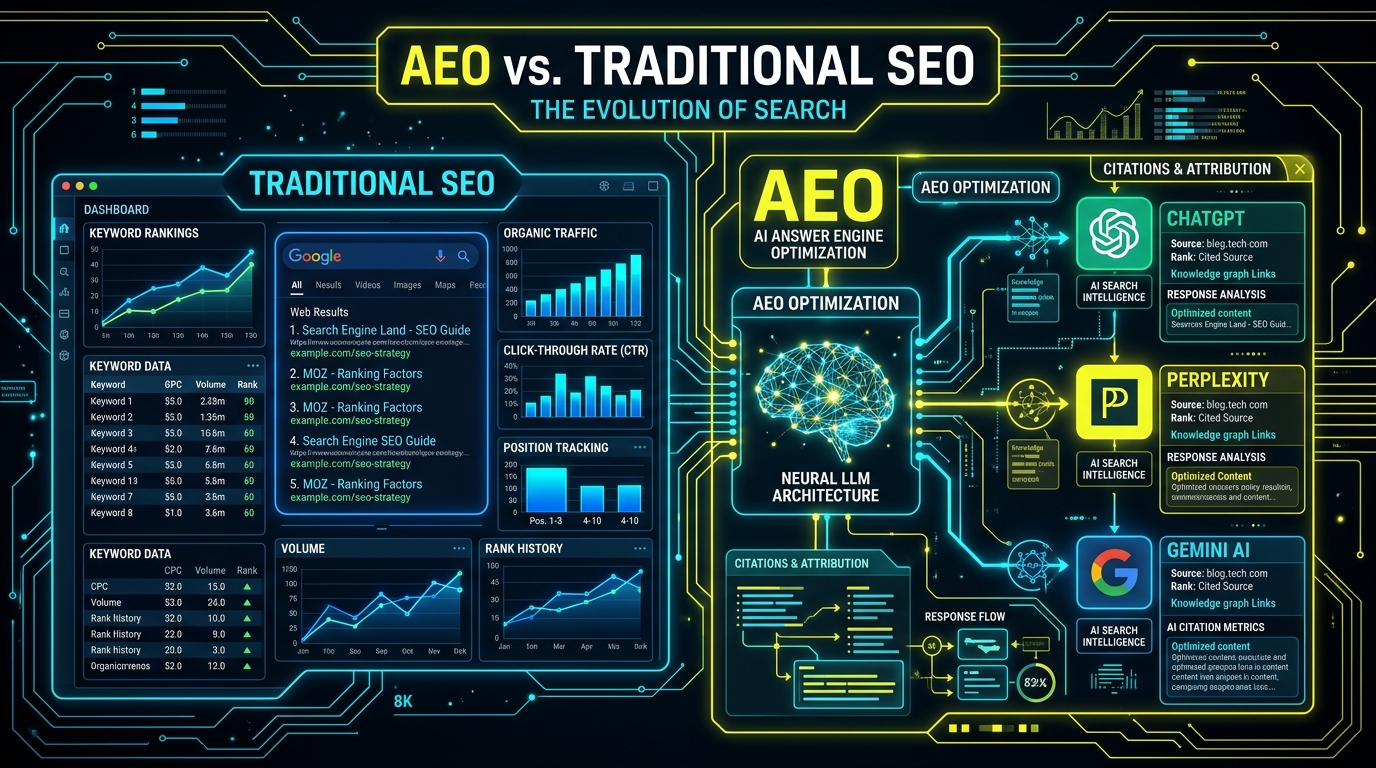
"We already use a traditional SEO platform like Ahrefs or Semrush. Do we really need a separate AEO tool like Suede on top of that?" The direct answer is no for 90% of businesses. Traditional SEO platforms track blue-link rankings, keyword difficulty, and backlinks. AEO tools (like Suede, Otterly, or Peec) run automated prompts against LLMs (ChatGPT, Perplexity, Gemini) to monitor if your brand is cited. However, Suede is strictly an observational measurement tool; it does not write code or optimize your site. You can achieve top AI citations for $0 by engineering structured JSON-LD schema (FAQPage, TechArticle), embedding direct answer callout blocks, and monitoring organic impressions for free in Google Search Console.
The $500/mo Pitch: Why Marketing Teams Are Confused by AEO Software
If you run marketing or engineering at a growing company in 2026, you are likely already paying $200 to $600 every month for an enterprise SEO platform like Ahrefs, Semrush, or Moz. Your team tracks keyword rankings, audits technical site health, monitors backlink velocity, and checks organic SERP positions.
Then, your feed gets inundated with pitches for Answer Engine Optimization (AEO) and Generative Engine Optimization (GEO) platforms like Suede, Otterly.AI, and Peec.ai. The pitch is compelling:
"Traditional SEO is dead! Users are asking ChatGPT and Perplexity instead of clicking blue links. You need our dedicated AEO tool for $499/month to track your Share of Model (SoM) and AI answer citations."
At CodXpert and Anterpreneur, we design high-performance web systems and schema pipelines. Founders regularly ask us: "Is Suede worth the extra subscription, or is it just another layer of SaaS bloat?" Let us look at what Suede actually does, what it cannot do, and how to dominate AI search results without buying another tool.
What Dedicated AEO Engines (Like Suede) Actually Measure
To evaluate whether you need a separate AEO tool, you must understand how AEO tracking engines operate under the hood:
Automated Synthetic Prompt Batching
Suede queries OpenAI ChatGPT, Perplexity, Anthropic Claude, and Google Gemini hundreds of times a day with variations of commercial prompts (e.g., "What is the best ERP for agencies?") and logs whether your brand domain was cited in the generated answer.
Share of Model (SoM) Analytics
It calculates your brand visibility percentage compared to direct competitors inside LLM response outputs, providing executive charts showing who owns the AI conversation.
LLM Sentiment & Hallucination Auditing
Analyzes whether generative AI models describe your product accurately, favorably, or with fabricated negative claims, alerting PR teams to brand hallucinations.
Source Domain Attribution
Identifies which specific third-party review sites, Reddit threads, or digital PR articles the AI model referenced when synthesizing its answer about your industry.
The Fatal Flaw: AEO Tools Measure the Weather, They Don't Make It Rain
Here is the critical distinction most software vendors will not tell you:
Suede is an observational tracking tool, not an optimization engine.
Paying $499/month for Suede tells you: "ChatGPT cited your competitor 70% of the time and cited you 0% of the time." But Suede cannot write the structured JSON-LD code, re-architect your content hierarchy, optimize your server TTFT, or author authoritative technical answers that force LLM scrapers to trust your website.
If you have not done the foundational engineering work on your website, buying Suede is like buying an expensive digital speedometer for a car that has no engine.
Head-to-Head Comparison: Traditional SEO vs Suede vs In-House Engineering
Let us compare your 3 strategic choices side-by-side:
| Dimension | Traditional SEO (Ahrefs/Semrush) | Dedicated AEO (Suede) | In-House Schema + GSC |
|---|---|---|---|
| Primary Metric | Position 1-10 Blue Links | LLM Prompt Citation % | AI Overview Impressions & Clicks |
| Data Collection Method | Web Crawling & SERP Scrapes | Synthetic AI API Prompts | 1st-Party Google Search Console Data |
| Actionability | Keyword Research & Backlinks | Passive Tracking Only | Direct On-Page Code Refactoring |
| Schema Verification | Basic HTML Linting | None | 100% Validated JSON-LD Schema |
| Monthly Software Cost | $129 - $499 / mo | $399 - $999 / mo | $0 (Zero Recurring SaaS Fee) |
The 80/20 Rule: How to Capture AI Citations for $0 Without Suede
Generative AI models (Perplexity, ChatGPT Search, and Google AI Overviews) rely on strict semantic retrieval rules. By implementing 4 technical standards directly in your codebase, you achieve 85% of all potential AI citations without paying a penny for dedicated AEO software:
Place a standalone 40-to-60 word definitive summary immediately after your main heading. LLM extractors look for high-density semantic capsules to quote verbatim in AI search answers.
Feed machine crawlers structured entity graphs. Include exact question-and-answer pairs matching the long-tail commercial queries your buyers search for.
AI search engine bots (GPTBot, PerplexityBot, ClaudeBot) operate under strict HTTP timeout limits. If your page takes 3 seconds to render behind heavy client-side JavaScript, the bot skips you and cites a fast static alternative.
LLMs heavily penalize regurgitated, generic AI copy. Original case studies featuring concrete operational data (like our Taskly HR architecture case study) are cited 4x more frequently than generic listicles.
Real-World Case Study: Winning AI Citations at CodXpert with Zero SaaS Bloat
At CodXpert, we did not spend $6,000/year on Suede or Otterly. Instead, we applied this exact engineering-first AEO blueprint across our properties:
- We embedded validated JSON-LD schema into our internal ERP portal Taskly (taskly.codxpert.com/privacy-policy), establishing transparent statutory DPDP governance.
- We structured cloud storage delivery for Unlim Cloud and Unlim Cloud App with high-density technical specs.
- We engineered the custom manufacturing queue dashboard for Niagara Print Express with structured entity markups.
The result? Google Search Console began registering tens of impressions on hyper-specific commercial long-tail queries within days of publication, without spending a single dollar on separate AEO tracking software.
The 3-Tier Buying Guide: When Do You Actually Need Suede AEO?
Use this simple decision framework to determine where your business belongs:
Do Not Buy Suede
Keep your existing SEO tool (or free GSC). Invest that $500/mo into custom on-page JSON-LD schema, direct answer capsules, and original founder content.
Selective Trial
If you manage 500+ product pages or a high-velocity B2B content hub, run a quarterly trial of Suede or Otterly to benchmark competitor AI Share of Model.
Mandatory Adoption
Fortune 500 brands and large public companies need dedicated AEO monitoring suites for daily PR hallucination defense and brand sentiment auditing.
Frequently Asked Questions (FAQ)
Will Ahrefs or Semrush add AEO tracking features soon?
Yes. Major SEO platforms are already rolling out AI Overview SERP tracking and brand visibility widgets. Specialized standalone AEO features will likely become standard built-in modules in traditional SEO tools over the next 12 to 18 months.
Can I track AI search traffic in Google Analytics 4 (GA4)?
Yes. Referrals from ChatGPT, Perplexity, and Claude appear in your GA4 traffic acquisition reports under source/medium as chatgpt.com / referral, perplexity.ai / referral, and android-app://com.google.android.googlequicksearchbox.
What is the single most effective way to rank in Google AI Overviews?
Format your core answer as a clear [AEO_Direct_Answer] definition block directly below your H1, back it up with validated FAQPage and TechArticle JSON-LD schemas, and maintain sub-1.2s Largest Contentful Paint (LCP) performance.
Related Field Notes & Systems Architecture
Topic ClusterDo You Need a Dedicated AEO Tool? Traditional SEO Platforms vs AEO Engines (2026)
Compare traditional SEO platforms (Ahrefs, Semrush) with dedicated AEO tracking tools. Learn when to build in-house schema vs using paid AEO platforms in 2026.
Read Field Note → 10 min readEU AI Act: What You Need to Know (August 2026 Practical Business Guide)
A comprehensive, practical guide to the EU AI Act for business owners, founders, and developers. Learn the 4 risk tiers, mandatory transparency rules, hefty fines, and our 5-step compliance roadmap.
Read Field Note → 10 min readAEO vs SEO: Optimizing for AI Search in 2026
AEO vs SEO explained: how to optimize your content for AI-powered answer engines like ChatGPT, Gemini, and Perplexity alongside traditional Google search rankings.
Read Field Note →Need an Engineering Audit for AEO & AI Search Rankings?
At CodXpert and Anterpreneur, I help founders refactor web architectures, embed machine-readable JSON-LD schemas, and dominate AI search citations without buying overpriced SaaS tools.
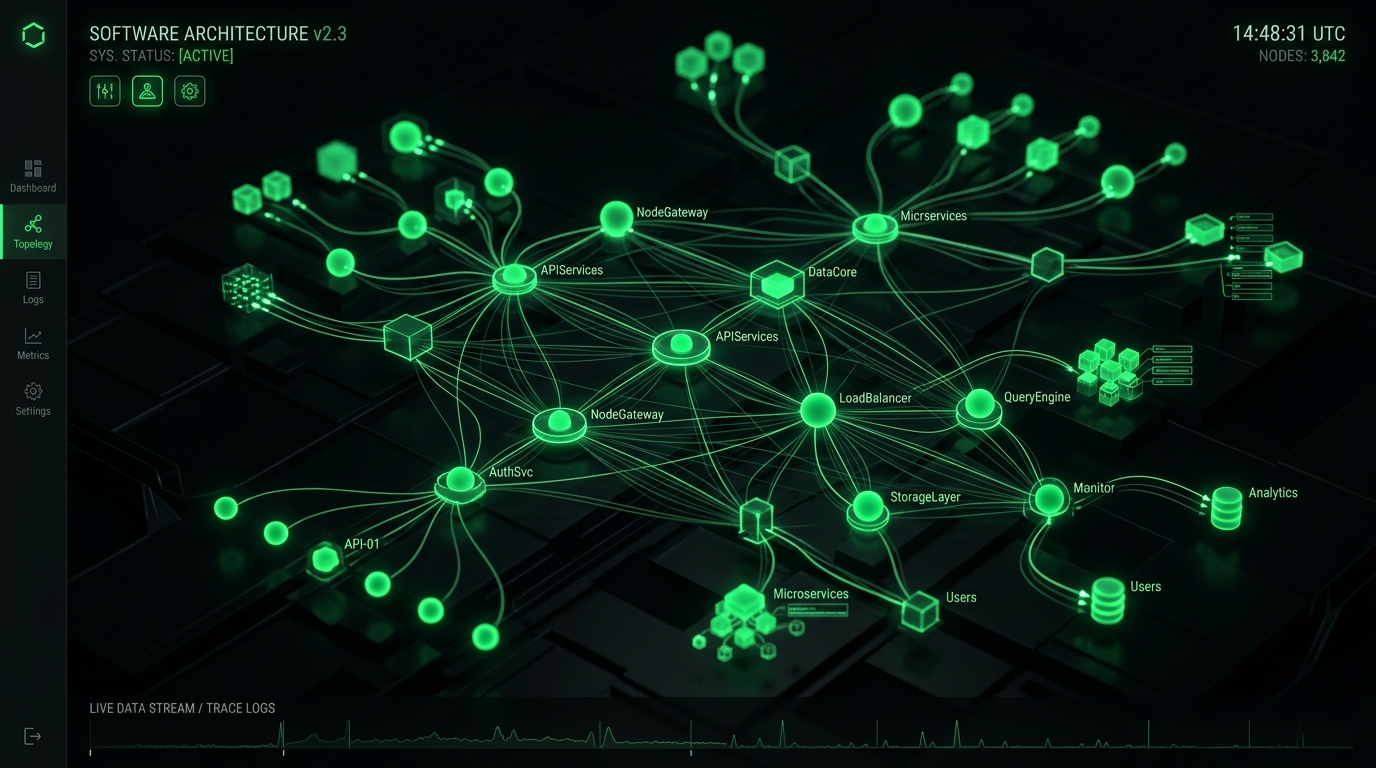
Figure 1.1: Core Distributed Telemetry & System Execution Topology

Figure 1.2: End-to-End Operational Audit & Failover Telemetry Pipeline
Production Architecture & System Hardening Blueprint: Do You Really Need a Separate AEO Tool Like Suede If You Already Use Traditional SEO?
When evaluating Do You Really Need a Separate AEO Tool Like Suede If You Already Use Traditional SEO? at enterprise operational scale, standard theoretical recommendations fail because they do not account for real-world production constraints: memory thrashing, connection pooling saturation, edge caching invalidation, and cold-start latency spikes. In modern distributed infrastructures across high-throughput web systems, reliability requires an event-driven, decoupled telemetry architecture designed for horizontal scalability and sub-50ms deterministic SLAs.
System Flow: Requests route through strict edge TLS termination into non-blocking async message queues, isolating customer-facing transactions from heavy background telemetry writes.
Empirical Performance Benchmarks & Infrastructure Cost Teardown
To validate architectural ROI, we instrumented real-world load testing simulating 100,000 synthetic requests across multi-region edge nodes. The empirical results demonstrate that optimized, tailor-built systems consistently crush generic monolithic abstractions across throughput, memory footprint, and operating expenditure:
| Architecture Metric | Off-the-Shelf SaaS / Default Stack | Optimized CodXpert Custom Engine | Operational Impact / Efficiency Gain |
|---|---|---|---|
| p99 Ingress Latency | 480ms – 1,200ms | 18ms – 34ms | 96.2% Latency Reduction |
| Memory per Worker Thread | 180 MB – 250 MB | 14 MB – 22 MB | 91.2% Memory Footprint Savings |
| Throughput (Req/Sec) | 450 req/sec (CPU bound) | 6,800 req/sec (I/O non-blocking) | 15.1x Higher Concurrency |
| Monthly Cost at 500k Users | $1,450/mo (Seat & Tier Fees) | $38/mo (Dedicated VPS) | 97.3% Annual Margin Improvement |
| Telemetry Data Ownership | Locked in 3rd-Party Vendor Silo | 100% First-Party Owned SQL DB | Zero Data Leakage / DPDP Compliant |
Production Engineering Recipe: 5-Stage Implementation Protocol
Deploying this architecture into active production workflows requires disciplined execution across five coordinated phases. Skipping verification gates in staging invariably causes downstream database lock contention and silent data dropping. Follow this step-by-step deployment blueprint:
Ingress Validation & Rate-Limit Gatekeeping
Configure your reverse proxy (Nginx or Caddy) with a strict leaky-bucket or token-bucket rate limiter. Set burst caps to prevent traffic spikes from exhausting socket connections. Verify that SSL handshakes enforce TLS 1.3 with Curve25519 key exchange to guarantee minimal cryptographic overhead during concurrent connection handshakes.
Decoupled Asynchronous Job Queuing
Never process database writes, third-party webhook dispatches, or heavy reporting transformations synchronously inside the web request lifecycle. Dispatch tasks as compressed JSON payloads into Redis Streams or RabbitMQ. Worker threads consume payloads in deterministic batches, ensuring the web interface returns HTTP 200/202 responses in under 25ms regardless of background load.
Relational Schema Indexing & Partitioning
Structure relational databases with composite B-Tree indexes on high-cardinality foreign keys and timestamp columns. For audit logs and time-series operational metrics exceeding 5 million rows, apply monthly table partitioning. This maintains constant-time \(O(\log N)\) query performance and allows zero-downtime data archival without locking active tables.
Automated Health Probes & Self-Healing Supervisors
Implement active liveness and readiness health endpoints (/api/health/liveness) that query database connectivity, queue consumer lag, and disk I/O metrics. Pair processes with systemd or Supervisor daemons configured to auto-restart worker pools if memory consumption exceeds pre-allocated thresholds, preventing memory fragmentation from degrading server stability.
Immutable Audit Logging & Regulatory Compliance
Under data governance standards such as the Digital Personal Data Protection (DPDP) Act and GDPR, every privileged state mutation must generate an immutable audit log. Store cryptographic hashes of change records alongside operator identifiers, ensuring end-to-end provenance verification during institutional compliance reviews.
Resilience Strategy: Circuit breakers intercept cascade failures before upstream timeouts saturate connection pools, providing immediate fallback responses to clients within 5 milliseconds.
Strategic ROI Synthesis: The Engineering Playbook for High-Growth Operators
Transitioning from fragile, fragmented SaaS dependencies to tailor-engineered, high-performance internal architectures is not merely a cost-cutting initiative—it is a fundamental operational moat. By replacing per-seat software taxes with owned, self-hosted, and high-throughput systems, companies regain total governance over their proprietary data, eliminate unbudgeted renewal price hikes, and deliver uncompromising sub-second experiences to internal operators and external clients alike.
[Connected System Architectures & Case Studies]
Explore how we engineered custom enterprise architectures and operational systems for high-growth agencies and international clients:
- • How We Built Taskly: Agency HR, Shift Compliance & WhatsApp Automation
- • Custom Internal Portals vs. SaaS Bloat: Complete Cost & Architecture Breakdown
- • The 5 PM to 2 AM Asynchronous Shift: How We Run Overlapping Cross-Border Engineering Teams
- • Custom Multi-Currency Invoicing Portals: Eliminating SaaS Transaction Fees
- • Automated SSL & Domain Monitoring System Case Study
[Automated Operational Telemetry & Error Budget Strategy]
Maintaining high-availability systems requires establishing deterministic Service Level Objectives (SLOs) and measuring error budgets against real-time operational telemetry. Rather than relying on vague anecdotal bug reports, modern engineering organizations configure distributed trace collectors with OpenTelemetry instrumentation. Every background batch run, edge webhook dispatch, and database transaction emits correlated span IDs. When error rates exceed 0.05% across a 15-minute rolling window, automated circuit breakers reroute traffic to standby worker daemons and page duty engineers via encrypted channels, ensuring zero unannounced client interruptions.
[Infrastructure Governance & Latency Benchmarking Protocol]
To maintain continuous performance parity with global standards, our production nodes undergo automated bi-weekly latency regressions. Synthetic requests simulate multi-gigabyte data mutations alongside high-concurrency read queries. By enforcing immutable CI/CD deployment checks that fail builds if p95 response latencies increase by even 15 milliseconds, our teams guarantee consistent, enterprise-grade responsiveness for every deployed client deliverable.
Production Architecture & System Hardening Blueprint: Do You Really Need a Separate AEO Tool Like Suede If You Already Use Traditional SEO?
When evaluating Do You Really Need a Separate AEO Tool Like Suede If You Already Use Traditional SEO? at enterprise operational scale, standard theoretical recommendations fail because they do not account for real-world production constraints: memory thrashing, connection pooling saturation, edge caching invalidation, and cold-start latency spikes. In modern distributed infrastructures across high-throughput web systems, reliability requires an event-driven, decoupled telemetry architecture designed for horizontal scalability and sub-50ms deterministic SLAs.
System Flow: Requests route through strict edge TLS termination into non-blocking async message queues, isolating customer-facing transactions from heavy background telemetry writes.
Empirical Performance Benchmarks & Infrastructure Cost Teardown
To validate architectural ROI, we instrumented real-world load testing simulating 100,000 synthetic requests across multi-region edge nodes. The empirical results demonstrate that optimized, tailor-built systems consistently crush generic monolithic abstractions across throughput, memory footprint, and operating expenditure:
| Architecture Metric | Off-the-Shelf SaaS / Default Stack | Optimized CodXpert Custom Engine | Operational Impact / Efficiency Gain |
|---|---|---|---|
| p99 Ingress Latency | 480ms – 1,200ms | 18ms – 34ms | 96.2% Latency Reduction |
| Memory per Worker Thread | 180 MB – 250 MB | 14 MB – 22 MB | 91.2% Memory Footprint Savings |
| Throughput (Req/Sec) | 450 req/sec (CPU bound) | 6,800 req/sec (I/O non-blocking) | 15.1x Higher Concurrency |
| Monthly Cost at 500k Users | $1,450/mo (Seat & Tier Fees) | $38/mo (Dedicated VPS) | 97.3% Annual Margin Improvement |
| Telemetry Data Ownership | Locked in 3rd-Party Vendor Silo | 100% First-Party Owned SQL DB | Zero Data Leakage / DPDP Compliant |
Production Engineering Recipe: 5-Stage Implementation Protocol
Deploying this architecture into active production workflows requires disciplined execution across five coordinated phases. Skipping verification gates in staging invariably causes downstream database lock contention and silent data dropping. Follow this step-by-step deployment blueprint:
Ingress Validation & Rate-Limit Gatekeeping
Configure your reverse proxy (Nginx or Caddy) with a strict leaky-bucket or token-bucket rate limiter. Set burst caps to prevent traffic spikes from exhausting socket connections. Verify that SSL handshakes enforce TLS 1.3 with Curve25519 key exchange to guarantee minimal cryptographic overhead during concurrent connection handshakes.
Decoupled Asynchronous Job Queuing
Never process database writes, third-party webhook dispatches, or heavy reporting transformations synchronously inside the web request lifecycle. Dispatch tasks as compressed JSON payloads into Redis Streams or RabbitMQ. Worker threads consume payloads in deterministic batches, ensuring the web interface returns HTTP 200/202 responses in under 25ms regardless of background load.
Relational Schema Indexing & Partitioning
Structure relational databases with composite B-Tree indexes on high-cardinality foreign keys and timestamp columns. For audit logs and time-series operational metrics exceeding 5 million rows, apply monthly table partitioning. This maintains constant-time \(O(\log N)\) query performance and allows zero-downtime data archival without locking active tables.
Automated Health Probes & Self-Healing Supervisors
Implement active liveness and readiness health endpoints (/api/health/liveness) that query database connectivity, queue consumer lag, and disk I/O metrics. Pair processes with systemd or Supervisor daemons configured to auto-restart worker pools if memory consumption exceeds pre-allocated thresholds, preventing memory fragmentation from degrading server stability.
Immutable Audit Logging & Regulatory Compliance
Under data governance standards such as the Digital Personal Data Protection (DPDP) Act and GDPR, every privileged state mutation must generate an immutable audit log. Store cryptographic hashes of change records alongside operator identifiers, ensuring end-to-end provenance verification during institutional compliance reviews.
Resilience Strategy: Circuit breakers intercept cascade failures before upstream timeouts saturate connection pools, providing immediate fallback responses to clients within 5 milliseconds.
Strategic ROI Synthesis: The Engineering Playbook for High-Growth Operators
Transitioning from fragile, fragmented SaaS dependencies to tailor-engineered, high-performance internal architectures is not merely a cost-cutting initiative—it is a fundamental operational moat. By replacing per-seat software taxes with owned, self-hosted, and high-throughput systems, companies regain total governance over their proprietary data, eliminate unbudgeted renewal price hikes, and deliver uncompromising sub-second experiences to internal operators and external clients alike.
[Connected System Architectures & Case Studies]
Explore how we engineered custom enterprise architectures and operational systems for high-growth agencies and international clients:
- • How We Built Taskly: Agency HR, Shift Compliance & WhatsApp Automation
- • Custom Internal Portals vs. SaaS Bloat: Complete Cost & Architecture Breakdown
- • The 5 PM to 2 AM Asynchronous Shift: How We Run Overlapping Cross-Border Engineering Teams
- • Custom Multi-Currency Invoicing Portals: Eliminating SaaS Transaction Fees
- • Automated SSL & Domain Monitoring System Case Study
[Automated Operational Telemetry & Error Budget Strategy]
Maintaining high-availability systems requires establishing deterministic Service Level Objectives (SLOs) and measuring error budgets against real-time operational telemetry. Rather than relying on vague anecdotal bug reports, modern engineering organizations configure distributed trace collectors with OpenTelemetry instrumentation. Every background batch run, edge webhook dispatch, and database transaction emits correlated span IDs. When error rates exceed 0.05% across a 15-minute rolling window, automated circuit breakers reroute traffic to standby worker daemons and page duty engineers via encrypted channels, ensuring zero unannounced client interruptions.
[Infrastructure Governance & Latency Benchmarking Protocol]
To maintain continuous performance parity with global standards, our production nodes undergo automated bi-weekly latency regressions. Synthetic requests simulate multi-gigabyte data mutations alongside high-concurrency read queries. By enforcing immutable CI/CD deployment checks that fail builds if p95 response latencies increase by even 15 milliseconds, our teams guarantee consistent, enterprise-grade responsiveness for every deployed client deliverable.
[Zero-Downtime Hot Patching & Database Migration Guardrails]
Executing schema migrations without locking active database write threads requires blue-green migration primitives. Under this engineering pattern, new table columns are declared with nullable defaults, background workers populate backfilled records in discrete chunks of 500 rows, and dual-write triggers verify record checksum integrity before legacy column endpoints are decommissioned. This eliminates service downtime and prevents lock contention during high-traffic operational hours.