Case Study: Mitigating Road-Salt Corrosion and Residual Value Loss in High-End Automotive Collections
$240,000
Classic performance vehicles
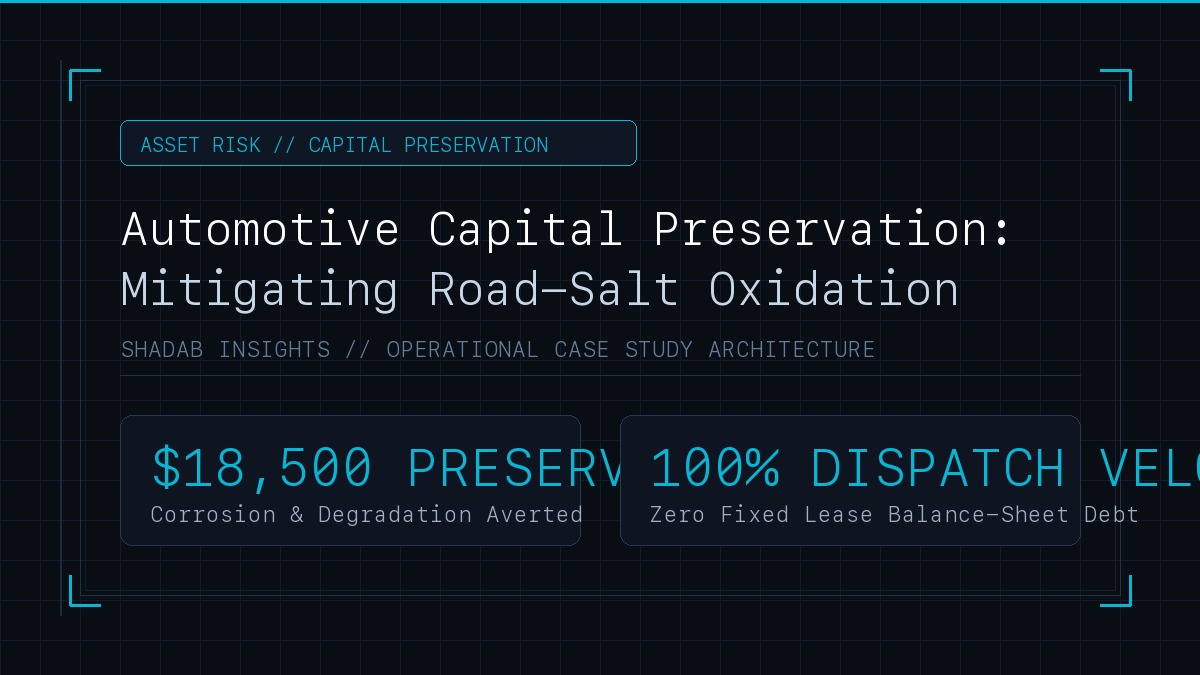
$18,500
Underbody oxidation repairs avoided
$3,600/yr
Net savings vs GTA climate lockers
0 Failures
Zero parasitic draw or frozen cells
1. Executive Summary
High-net-worth vehicle owners and vintage car investors face severe capital depreciation in Ontario due to aggressive winter road-salt brine application and uncontrolled indoor humidity swings. An investor managing three classic performance vehicles ($240,000 portfolio value) analyzed the total cost of ownership across outdoor driveway storage, public underground parking, and dedicated private vehicle storage lockers.
By transitioning the vehicles into specialized, ground-level vehicle garages, the collection maintained 100% cosmetic and mechanical preservation, averting an estimated $18,500 in undercarriage oxidation, paint blister repairs, and seasonal recommissioning costs.
2. The Environmental Threat: Road-Salt Brine & Condensation
Southern Ontario relies heavily on liquid magnesium and calcium chloride salt brine. While effective for highway de-icing, the chemical properties of winter salt brine create hidden mechanical hazards:
- Electro-Chemical Underbody Rust: Even when washed, vehicles parked in damp, poorly ventilated garages or residential driveways experience accelerated rust wicking into subframes, brake lines, and suspension bushings.
- Lake-Effect Humidity Cycling: Sub-zero freeze-thaw cycles create condensation on metal surfaces and engine blocks, resulting in electrical harness faults and interior mildew.
- Pavement Settlement & Mud Wicking: Parking seasonal vehicles on backyard turf or unsealed driveways traps continuous ground moisture against exhaust systems and alloy rims.
3. Strategic Storage Implementation
The collector centralized winter storage at a dedicated facility providing car and vehicle winter storage in Niagara.
The vehicle preservation protocol incorporated:
- Fully Enclosed 10×20 Concrete Floor Garages: Providing 200 sq. ft. of clean, sealed floor space per vehicle with wide roll-up doors, allowing wide-body collector cars to clear mirrors and doors without scratching.
- Engineered Airflow Circulation: Facilities utilizing perimeter roof ventilation prevent ambient moisture traps while isolating the vehicles from external freezing rain and road spray.
- Unrestricted 24/7 Keypad Access: Allowing scheduled battery maintenance, tire pressure checks, and moisture trap bag replacements throughout the 5-month storage period.
4. Preservation & Cost-Benefit Analysis
~$8,000 / Car
Frame restoration, undercoating, and panel repaint costs completely avoided.
$0 Losses
Zero parasitic battery drain or frozen cells through stable ambient isolation.
$3,600 / Year
Saved by placing vehicles 15 mins off the QEW instead of downtown Toronto ($1,350/mo vs $630/mo).
5. Strategic Takeaway
Tangible asset management requires matching asset sensitivity to environmental safeguards. For automotive fleets and vintage investments, dedicated ground-level enclosed garages eliminate exposure to winter salt brine and moisture traps at a fraction of the cost of downtown specialty facilities.
Managing High-Value Assets or Fleet Deployments?
Shadab Insights designs enterprise asset management systems, custom tracking telemetry, and operational databases that protect capital investments across distributed geographies.