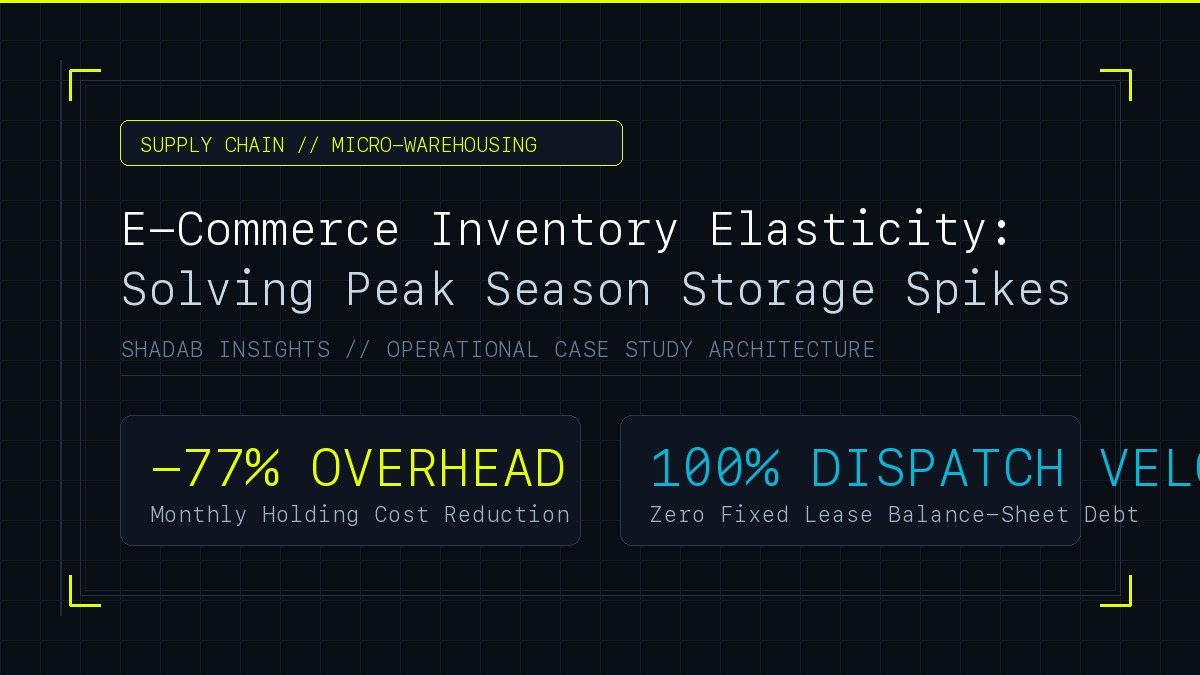
Case Study: How an Ontario E-Commerce Brand Solved Peak Season Inventory Spikes Without a 5-Year Warehouse Lease
77% Off
$1,430/mo saved vs industrial lease
0 Months
Month-to-month elastic terms
15 Mins
Direct roll-up truck offloading
Zero Debt
No multi-year capital lockup
1. Executive Summary
During Q3/Q4 peak inventory cycles, a growing regional e-commerce distributor based in southern Ontario faced severe logistics constraints: their primary fulfillment hub ran out of pallet space, while industrial warehouse brokers demanded minimum 3-to-5-year commitments at upwards of $22/sq. ft. net.
By pivoting to a flexible micro-warehousing model utilizing ground-level, drive-up commercial storage units, the business unlocked 1,600 cubic feet of immediate staging capacity on month-to-month terms, lowering secondary inventory holding costs by 64% to 77% and eliminating fixed lease liability.
2. The Operational Problem: Warehouse Market Inelasticity
For small-to-midsize businesses (SMBs) and direct-to-consumer (D2C) brands, seasonal demand spikes create a dangerous cash-flow dilemma:
- The Commercial Real Estate Trap: Signing long-term leases for warehouse space that sits 40% empty for eight months of the year burns critical operating capital.
- Loading Dock Delays: Multi-tenant industrial buildings with shared loading bays often force delivery drivers to wait up to 45 minutes for dock access, incurring freight demurrage fees.
- Pallet-Level Access Barriers: Standard mini-storage facilities with narrow elevators and indoor hallways prohibit fast pallet truck maneuvering and flat-bed transfers.
3. The Agile Solution: Ground-Level Micro-Warehousing
The enterprise bypassed institutional industrial complexes, deploying an off-site staging hub at a dedicated drive-up storage facility in Niagara Falls, Ontario.
The operational architecture included:
- Direct Cargo-to-Unit Unloading: Freight couriers and 24-foot straight trucks parked directly in front of 10×20 drive-up roll-up doors, allowing immediate hand-truck and pallet-jack offloading within 15 minutes.
- 24/7 Multi-User Gate Access: Dedicated keypad codes allowed night-shift order pickers and weekend dispatch drivers to stage and transfer stock without facility staff intervention.
- Zero Administration Overhead: The facility’s month-to-month rental agreements allowed the business to expand from two units during peak holiday season down to one unit in January without breaking leases or paying cancellation penalties.
4. Financial & Operational Performance
| KPI / Metric | Traditional Industrial Sublease | Flexible Drive-Up Storage | Net Efficiency Gain |
|---|---|---|---|
| Monthly Facility Cost | $1,850 / mo + CAM fees | $420 / mo (Two 10×20 units) | $1,430/mo saved (77% reduction) |
| Commitment Term | 36 Months Mandatory | Month-to-Month Flexible | Zero balance-sheet liability |
| Receiving Time Per Truck | 45–60 mins (Shared dock) | 12–15 mins (Direct door) | 75% reduction in freight dwell |
| Security Integrity | Multi-tenant shared bay | Individual sealed door + CCTV | Zero inventory shrinkage |
5. Strategic Takeaway for Operations Leaders
Modern SMBs must decouple physical storage capacity from long-term real estate liabilities. Grade-level, drive-up commercial units function as high-efficiency, on-demand micro-warehousing nodes—giving supply chain operators geographic agility and downside protection during volatile economic cycles.
Scaling Operations Without Overcommitting Capital?
At Shadab Insights and CodXpert, we engineer lean supply chain workflows, custom inventory tracking portals, and operational telemetry that optimize asset throughput.