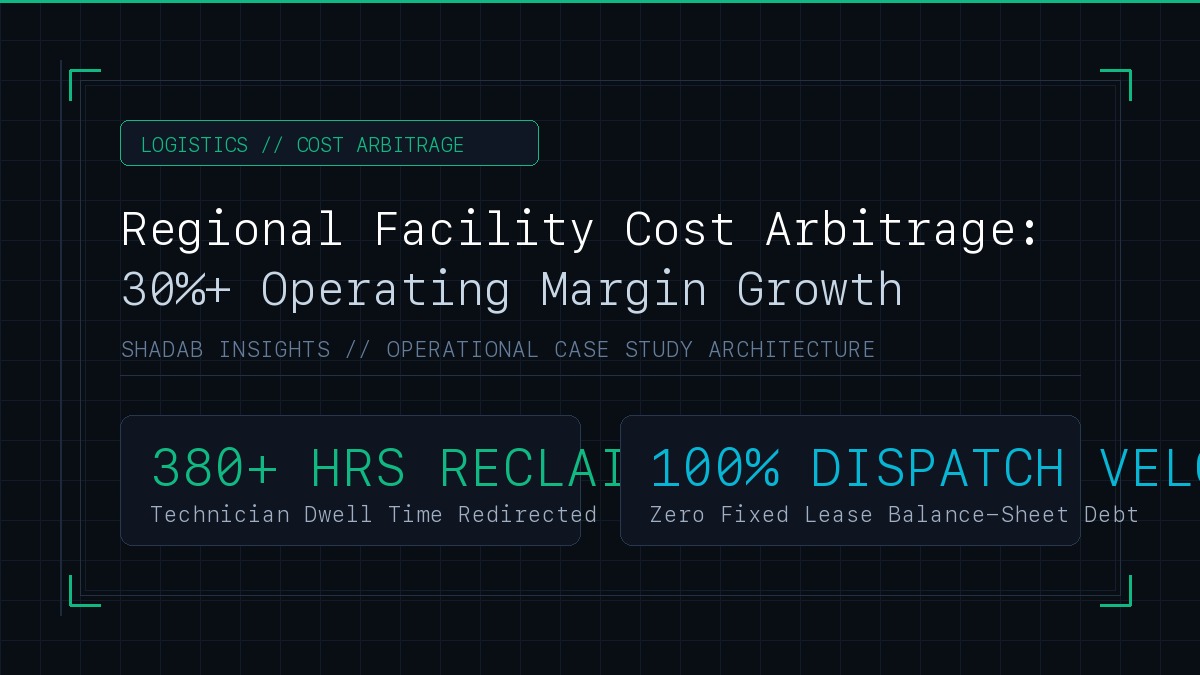
Case Study: How Regional Service Businesses Achieve 30%+ Operating Margin Gains Through Facility Cost Arbitrage
32% Off
$2,280 saved annually on lockers
11 Mins
Per technician daily travel reclaimed
380+ Hrs
Redirected to client billables
+$22,800
Net revenue potential unlocked
1. Executive Summary
Commercial maintenance and trade operations serving multi-city territories frequently overpay for downtown core locations under the assumption that proximity equals efficiency. A commercial facilities maintenance company with 14 field technicians serving St. Catharines, Welland, and Niagara Falls conducted a fleet route analysis and discovered their downtown St. Catharines storage locker added 28% in rent premiums while delivering zero routing benefits.
By relocating their central supply cache to a strategically positioned drive-up self storage facility along the central Highway 20 / Ramsey Road corridor, the company lowered monthly unit costs by 32%, streamlined inventory restocking, and achieved regional operational synergy.
2. The Geographic Misconception: Core vs. Corridor
Many businesses assume leasing storage or yard space within urban cores (e.g., central St. Catharines or downtown Niagara Falls) improves crew productivity. In reality:
- Congestion Delays: City-center facilities force service vans to navigate school zones, stoplights, and pedestrian corridors just to pick up daily consumables.
- Downtown Real Estate Premiums: High urban land values drive up storage rates to $260–$320 per month for standard 10×15 spaces.
- Restrictive Truck Navigation: Narrow downtown alleys make turning large 20-foot trailers difficult and increase collision risks.
3. The Arbitrage Strategy: The Highway Hub Model
The company shifted its primary material staging to a facility situated immediately off primary regional transit routes (near the QEW and Highway 20/Portage Road intersection):
- Equalized Regional Transit: Crews from St. Catharines reached the site in 14 minutes, crews from Welland arrived in 12 minutes, and South Niagara technicians arrived in under 6 minutes.
- Unimpeded Open-Road Access: Wide arterial roads allowed heavy work vans to pull in, load water heaters, wire spools, and HVAC parts, and return to service calls without city-center traffic delays.
- Transparent Pricing Structure: The facility provided flat, fee-free month-to-month contracts without administrative charges or forced insurance surcharges.
4. Quantifiable Financial & Efficiency Impact
| Operating Metric | Previous Downtown Depot | Regional Arterial Hub Depot | Net Improvement |
|---|---|---|---|
| Monthly Rental Overhead | $560 / mo (Two 10×15 lockers) | $370 / mo (Two 10×15 lockers) | $2,280 saved annually (32% gain) |
| Fleet Restock Travel Time | 24 mins avg. (Stop-and-go) | 13 mins avg. (Highway access) | 11 mins saved per tech / day |
| Annualized Labor Reclaimed | Baseline (Lost in traffic) | 380+ hours redirected | ~$22,800 added billable capacity |
| Setup & Administrative Fees | $90 upfront ($45/unit) | $0 (Waived) | 100% eliminated upfront fee |
5. Strategic Takeaway
Location strategy is about travel velocity, not geographic center. For regional field service companies, placing inventory depots along unimpeded highway arteries creates an immediate cost arbitrage: lower square-foot rental rates paired with faster technician transit times.
Looking to Optimize Field Service Routing & Overhead?
We build custom field logistics routing tools, GPS fleet tracking dashboards, and operations portals that eliminate wasted technician hours.